Tessa Goes Green

Though we all may come from different neighborhoods, cities, and even countries, there is one place that all of us call “home” – Earth! Now more than ever, citizens from around the world have been paying extra attention to taking care of our planet and reducing their carbon footprint. Here at Tessa, we are proud to have joined the cause. 

Tessa’s Efforts for a Cleaner Earth

The Tessa Team is thrilled to announce that we have implemented a recycling program for our students! This program allows students in each classroom to learn firsthand both the proper way to recycle and how recycling benefits the planet. 

If you take a look into our classrooms, you will now see a few different waste bins for different purposes. Our students are being taught to distribute their waste into these bins according to material (paper, plastic, aluminum, glass, compostable materials).  

But what about waste that is not traditionally recyclable? Thanks to Ms. Ana in Spanish Pre-K 3, Tessa is now participating in TerraCycle, a program that strives to eliminate the idea of waste. This program is funded by brands, manufacturers, and retailers around the world to help people recycle hard-to-recycle waste. As part of TerraCycle, here at Tessa, we’ve started collecting dental products such as toothpaste containers and floss and are working to add more products to the list!

 How You Can Help

We truly hope that the recycling efforts we are making at Tessa inspire our students and their families to continue these efforts outside of the classroom. If you are already doing your part to recycle at home, on behalf of the rest of the planet, thank you. If you are feeling inspired to start recycling, here are a few helpful tips to get you going: 

  • Reduce your waste! Use reusable coffee mugs and straws as often as you can. Some coffee shops will even give you a discount for bringing your own cup!
  • Be sure to check your refuse provider website. Sometimes things that we might think are recyclable aren’t. Also, often times, certain materials cannot be mixed together. If this happens, the entire collection of recyclables may just end up in a landfill.
  • Rinse food and liquid containers and remove any caps prior to recycling
  • Try to use glass in place of plastic as much as possible. Glass is almost infinitely recyclable!

United Nations Day at Tessa International School

          The United Nations is an intergovernmental organization that was created after World War II to strive to prevent new international conflicts in the future. The world celebrates United Nations day every October 24 to honor the international organization promoting human rights, social progress, and world peace.

          The UN was originally formed by 51 countries.  These countries work together to maintain peace, promote sustainable development, protect human rights, uphold international law and deliver humanitarian aid to people in need.  Today there are 195 member countries!

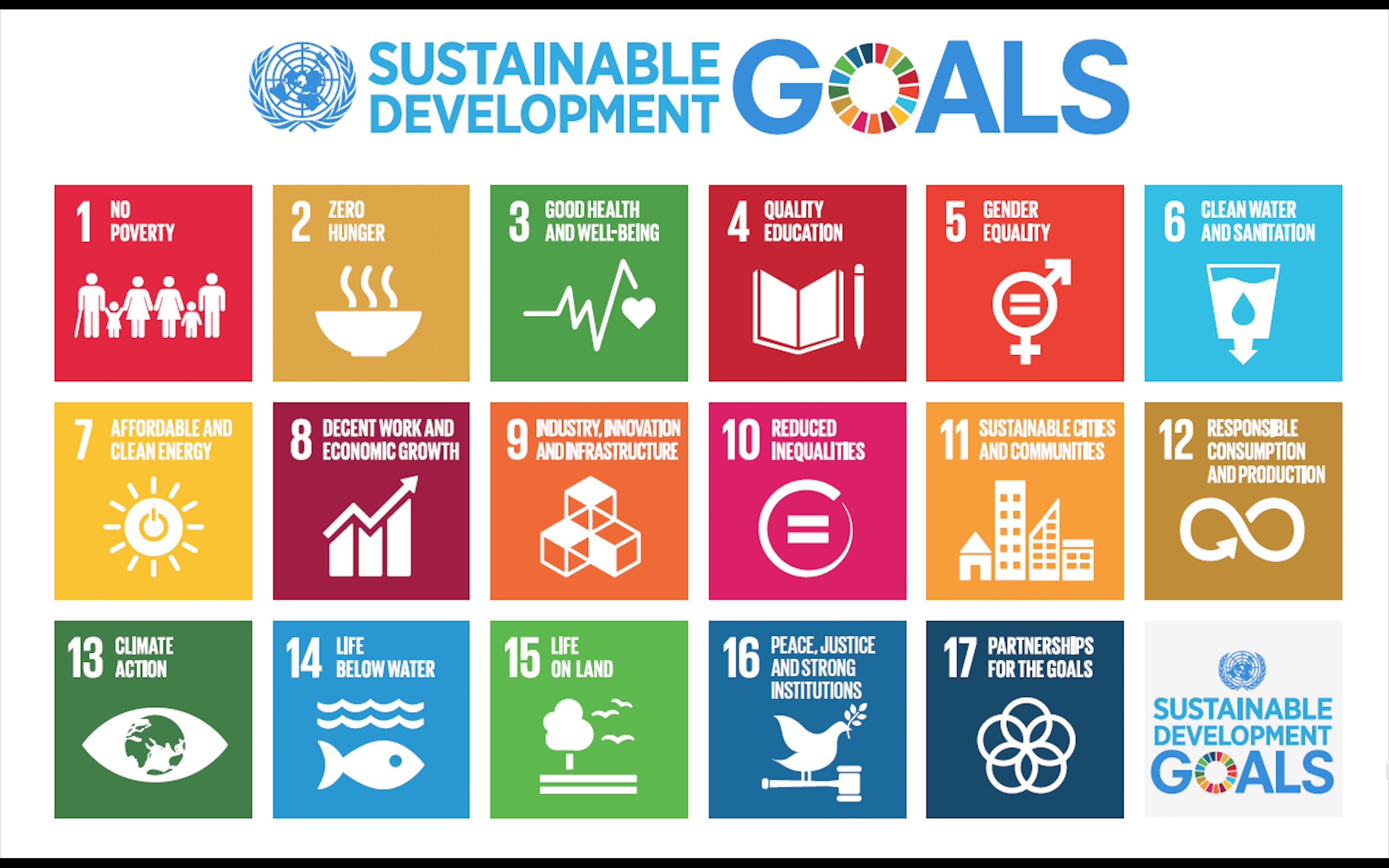
Image result for un sustainable development goals


The UN at Tessa

The United Nations are especially close to our hearts as our vision for the future is very much in sync with theirs: to contribute to building a peaceful, collaborative world, in which we all can learn from each other. Each year we celebrate with student performances in Spanish and French and other activities related to various countries of the world. Our students and teachers are dressed in national dress representing over 20 countries worldwide.

This event also contributes to raise awareness of human diversity among our students, but also in the city: this year, Mayor Bhalla, will address the assembly! We will also have a performance of Irish folk music / international music by the talented Shan and Dan.

A few facts about the UN

United Nation’s Four Main Goals:

The United Nation’s four main purposes are to:

  1. United Nations maintains worldwide peace and security.
  2. Developing good relations among nations.
  3. Encourage cooperation between nations to solve economic, social, cultural, or humanitarian international problems.
  4. Provide a forum to bring countries together to meet the purposes and goals of the UN.

How to Celebrate UN Day!

          To celebrate, we have to think about many years of history, struggle and achievements. Today is not just a day of looking back in history, it is a day to take note of what the UN is currently doing to build a better life for everyone on the planet, and how it plans to continue like this in the future. Let’s take a moment today to consider the incredible impact that the United Nations has had in every corner of the world for more than 70 years.

Here are some ideas to celebrate UN Day:

  • This day you can wear your national costume!
  • Discuss the importance of cultural diversity with your co-workers, friends or family.
  • Post about this day on social media along with your thoughts about this day.
  • Check out if there are any cultural activities taking place in your neighborhood and attend one.
  • Organize an international potluck to explore the traditional dishes of other cultures.
  • Recycle! The UN is very committed to protecting the environment.

Utilizing Technology in Inquiry-Based Education

Inquiry-based education, or IB education for short, is the natural process of learning through inquisitive behavior and deep curiosity. It is, essentially, learning by finding topics that pique children’s’ interests enough that they take the driver’s seat and discover new information through research and questions on their own.

IB Education in the Classroom

When utilizing inquiry-based education in the classroom, the first step is always to find the right topic to spark enough interest in students. Since motivation is the prime factor that drives their desire to initiate learning through IB means, it’s imperative to find the right angle for your lessons to keep them truly engaged.

Not only do educators need to have an exciting and relatable subject, but they also need to include innovative ways to continue beyond the piqued interest phase. Since the process of IB learning includes both exciting topics and continued questioning and research, it only makes sense to incorporate technology into your lessons.

Utilizing Technology for IB Education

With a growing number of educational programs and apps available every day, utilizing technology in the classroom is easier now than ever before. There are hundreds of tech choices available that will enhance an IB education experience and give children the tools they’ll need to problem solve and research.

“Children naturally explore and learn about their environments through inquiry, and computer technologies offer an accessible vehicle for extending the domain and range of this inquiry,” explain researchers from Mount Saint Mary College in the Early Childhood Education Journal article, March 2010.

How to Use Technology

Since the IB educational technique is a process for learning, not traditional information regurgitation, it will help children throughout their educational careers and beyond. The process involves noticing scenarios in detail, learning to ask imperative questions, researching those questions for solutions, and presenting the information to others in a way that is clear and concise.

Knowing this, it’s easy to understand how technology could aid students during this process. Depending upon which media outlet is chosen, technology can be used in practically every aspect of IB education. It can be used to supply intriguing scenarios for analysis through videos or puzzles, as well as provide unlimited research materials to help students find solutions to the problem areas they outlined in the earliest steps. Technology can even be used in the final steps – or the presentation portion of IB learning – which encourages students to explain their findings to others.

Technology and the IB Advantage

“Inquiry-based learning is a process where students become involved in their own learning. Inquiry-based learning builds on student passion and results in increased student agency,” explains professors at the University of New Hampshire.

IB education is a highly engaging teaching process because it is focused on areas that are highly interesting to students and hands them the keys to begin learning on their own. Adding technology to the mix only serves to strengthen this desire to learn. If you want to learn more about how Tessa incorporates IB learning in their early education classrooms, check out the Program of Inquiry here.

Exploring the biological, chemical and physical aspects of our world with the Liberty Science Center

Good morning from your Liberty Science Center community partners! During this past week’s activities, we worked with your children to continue our exploration of who we are! We did this through investigating the pieces and parts that make up a robot’s body and comparing them with what we have ourselves. For example, we looked at how while robots have batteries, we have a heart. We looked at pictures of the heart according to age appropriate children’s story books and squeezed heart shaped stress balls to investigate how our heart moves inside our body. 

Our investigations eventually led us to noticing that sometimes we have things that robots do not have. We found that while we have teeth to help us eat nutritious food, robots do not have them! Using an extra large toothbrush, your children brushed the teeth of a model mouth to think about how we take care of these special parts of our bodies and how our teeth might look different amongst the members of our family. 

Here at Liberty Science Center, we are dedicated to inspiring the next generation of scientists and engineers through the power, promise, and pure fun of science and technology. As we continue our third year together, we are excited to keep bringing STEM learning opportunities that not only align with the school’s program of inquiry but also encourage your children to see themselves as scientists and engineers. We look forward to seeing them again this week!

What Is Inquiry-Based Education?

As an educator or parent, few things are questioned more than how to spark learning interest in our children.  Trying to find what motivates our children to learn and avoid the dreaded “I don’t know” answers can be a daunting task. Because of this, many are turning to a technique known as inquiry-based education. So just what is inquiry-based education?

What Is Inquiry-Based Education

Inquiry-based (IB) education “is more than asking a student what he or she wants to know… it’s about triggering curiosity,” explains the George Lucas Educational Foundation. Essentially, IB learning places the responsibility of learning on the shoulders of the students rather than emphasizing teaching by the educators. In other words, it is finding a way to pique children’s natural interest to learn and using that as fuel to continue learning further.

By utilizing tactics that shift the learning process from the responsibility of the teacher to being led by individual students, IB education creates a more engaging educational experience. It is a strategy that goes beyond the books and encourages children to think freely and deeply to form their own understanding of various subjects.

Piquing Curiosity

The most important aspect of IB education is piquing the curiosity of students. Finding out what motivates them and getting children to take the reins of their own education is at the root of this learning process. So how do you go about triggering their drive to learn?

This is, perhaps, the most difficult aspect of IB learning, and not one that has a direct answer. For some, motivation can be as simple as keeping it relatable (scenarios about Christmas gifts or Halloween candy for example), while others have better luck using things that spark creativity or imagination (artwork, videos, puzzles).

“You have to model your own curiosity quotient – that hunger to learn that defines how we advance our knowledge of the world… think about your content area… What new piece of information might help you trigger your own enthusiasm that can then trigger your students’ curiosity?” writes Edutopia.org.

The Scientific Method

Once you have discovered what interests them, the next step in IB learning is to switch the focus from teaching to learning. How? Students are urged to come up with their most burning questions about the topic.

Think of the IB learning process in terms of the Scientific Method. First, ask students to observe the topic you presented to them and ask them to give it some thought. Once they familiarize themselves with the topic, have them form questions and think of possible answers to their questions. Ask them to come up with potential solutions or experiment with different outcomes of the scenario before taking another look at their progress and concluding what they’ve learned.

Step 1: Look at the Topic

If utilizing a method similar to the scientific method, once your students’ curiosity is piqued, ask them to take note of what they see. Have them document scenarios, write or discuss down details, and simply describe what it is that is in front of them.

This process will help them to better identify a topic and give them additional information for the next few steps. Encourage children to be as detailed as possible in their descriptions. This step is one of the greatest benefits of IB learning: noticing what’s around them and deciphering what aspects are most important to their scenarios.

Step 2: Question, Question, Question

After students have had ample time to note what is in front of them, the next step is to heavily emphasize their curiosity. This is done by getting them to begin questioning what they see. IB learning focuses on inquiry, or the desire to learn more, which begins by asking questions.

In this step, students are encouraged to think critically about the scenario in front of them and document any questions they may have. No question is off the table, and the more they question, the deeper their understanding will be so encouragement is the key. The most effective questions are the ones that drive students to have even more questions, so the focus of an educator in IB learning is more on sparking interest and less on giving answers.

Step 3: Research Their Questions

Once students have come up with their most intriguing questions, it’s time to find the answers. With IB learning, however, the students are in charge of finding their own answers. Dedicating class time and resources for children to conduct their own research is crucial to the process. This gives kids the means and the time to find answers to their own questions in a (somewhat) guided space.

The deeper the curiosity for their questions, the deeper the student’s drive to research and find answers. It is this drive and curiosity that will fuel their desire to truly learn a topic by their own inquiries rather than by traditional teaching methods.

Step 4: Hypothesize and Present

After students have used critical thinking to develop questions and research solutions to potential problems, it’s time to guide them into the hypothesis presentation stage. This is the part of the process that has students focusing on what they’ve learned and are tasked with organizing their findings to present them to others in the classroom.

Since learning is not only about discovery and critical thinking, but also about successful communication and understanding, it’s important that students be able to present what they’ve learned to others. This step forces children to understand the scenario even further, in order to find ways to share it and make sense of it to other students.

Step 5: Reflection and Critique

Perhaps the most important step of IB learning is the final phase – the reflection portion. It’s in this stage that students are asked to evaluate what they learned and to make note of any issues they came across in their research and presentations.

This step gets children to think more on what type of questions got them the furthest in their studies and which theories worked best as well. It can also help them to highlight areas that weren’t so helpful, giving them insight on what to try (or avoid) next time.

The IB Learning Experience

Overall, IB learning is simply learning that is driven by students’ own curiosity. It is highly effective because it gives students a sense of thoroughly understanding topics – or becoming experts, per se – and teaches them the art of deeper learning.

While there are no set formats for IB learning, the key is to find what motivates children and get them to think freely to develop a deeper understanding. The best way to do this? Get them asking questions and give them the resources to find their own answers. This is IB learning.

Curriculum Night at Tessa International School

Curriculum Night is an interactive information session hosted by schools all over the country a few weeks after children get back to school every year. It takes place at all levels, from early years to high schools; in public and private schools alike.

Typically, teachers make short presentations focusing on curriculum, routines, expectations, homework assignments and the concepts, skills, and knowledge that will be addressed and attended to during the year–all of which are crucial for a successful year ahead for your child.

A blend of best educational models at Tessa:

Tessa’s mission is to prepare children to be leaders of the 21st century and happy world citizens. At Tessa, we provide a world-class education, based on the most successful international models. This means that we blend French, Spanish, and New Jersey State Standards and combine them with a progressive educational model called the International Baccalaureate (IB) Primary Years Program (PYP). We are currently a candidate school for implementing the IB PYP starting from this month and we hope to get authorized by the end of the academic year 2020-21. The authorization journey is a rigorous process and a transformative experience for the entire learning and teaching community including parents.

The IB PYP is a curriculum framework designed for students aged 3 to 12 years. The PYP transdisciplinary framework focuses on the holistic development of the child as an inquirer–both at school and beyond. The PYP practice is informed by the latest research in how students learn, how educators teach, and the principles and practice of effective assessment. The program places a powerful emphasis on inquiry-based learning.

The International Baccalaureate aims to develop students into inquirers, thinkers, communicators, knowledgeable, principled, caring, open-minded, balanced and courageous learners. To this end, the IB works with schools, governments, and international organizations to develop challenging programmes of international education and rigorous assessment.

Unique Language Immersion in Early Years at Tessa:                             

At Tessa, we offer a unique opportunity to our young learners to immerse themselves in either Spanish or French stream (and Mandarin starting in September 2021) all day long. Apart from immersing themselves either in their native language or a new language, children are provided with opportunities to explore their environment and learn about their world through play and relationships with peers, teachers, family and community members.  The IB believes that young learners are intelligent, resourceful and creative individuals who grow, develop and learn at different rates. At Tessa, we aim to make it a holistic learning experience that integrates social-emotional, physical and cognitive development in a dynamic environment that promotes play, discovery and exploration.

Dual language Immersion in the PYP at Tessa:

It is believed that all learners stand to benefit from dual language immersion. Starting from Grade 1, native French or Spanish speakers maintain and develop their first language while acquiring native like linguistic skills in English language or vice versa. Besides language acquisition, children inquire and learn math, content areas (social studies, science) and specialist subjects such as visual arts, music, technology and P.E. through inquiry-based learning. Children will learn to take responsibility for their learning and construct their own understanding in a variety of content areas and strive to become life long learners.

What to Expect on the Curriculum Night at Tessa:

  • Meet the school leadership team including the founder, the Head and the Deputy Head of the school and the program coordinators.
  • Meet your child’s teacher in the classroom to gain an insight into what and how your child will be learning this year. Get a glimpse of the daily schedule, routines, and curriculum expectations for the year
  • Get familiar with your child’s learning environment. This is an opportunity for you to sit in your child’s seat literally as the presentation tends to be in your child’s homeroom. You’ll get a feel for their learning environment.
  • If you are interested in volunteering, please sign up to become a class parent.

Padmaja Naidu
PYP Coordinator
Tessa International School


At Tessa, It’s Safety First!

As parents, you take all the extra steps necessary to ensure your child is safe and healthy. High standards for classroom safety and cleanliness are reassurance that your child’s well-being is our top priority. Every child will experience the usual bumps, bruises, sniffles and sneezes from time to time. But keeping these to a minimum should be the goal. An important question you may ask is “How does your staff make safety and cleanliness a top priority for your students?” Tessa International School would like to share with you our objectives toward safety and security.

Security Features and Initiatives

  • Mr. Dan and Ms. Rotana are now regularly greeting families at the front door.
  • A double-entry door is planned behind the front door and architectural drawings are underway.
    • A second door will require parents to buzz in twice and will act as a buffer so that no person may directly enter the school without first being authorized.
  • Hoboken Police Officer Lieutenant Melissa Gigante will soon be visiting the school for a safety survey (and visit to Grade 1!).
  • The Monroe Center now has an armed guard present in the main space of the Monroe Center.
  • Tessa staff members have recently taken a CPR/FA course for certification to ensure we are properly trained in up-to-date emergency procedures.
  • Tessa has continued the Safety and Security Committee. Committee Head Alissa Reeves in conjunction with committee members Maria Cintron and Yoa Meikle are reviewing current safety procedures to denote methods of improvement.
    • Child Allergy/Medication Notes
    • First Aid/CPR responses
    • Procedures for teaching children to recognize and develop appropriate responses for emergency situations (e.g.,.- Dial 911, universal sign for choking, stranger danger, safe play with peers, attentiveness to social-emotional learning)
    • Emergency phone numbers posted in each classroom and at front desk.

Preparation and Drills (Continuing)

  • Monthly Fire Drills.
    • Fire drills are announced through our Amazon Echo Dots. Teachers gather the children and exit by the side door and congregate at one of three locations: The corner of Panello pizzeria, the front of the park on Jackson and 7th, or Hoboken Catholic Academy (inside the gym for Indoor Evacuations).
    • Dan Buck, Head of School, times the drill and collects the count of students from the teachers.
  • Lockdown Drills.
    • Lockdown drills are practiced at least twice per year.
    • Lockdown drills are communicated to staff by the Head of School. Doors are closed and locked, shades are drawn, quiet activity engaged and emergency escape routes planned.

Tips for Parents

  • Don’t forget to check Brightwheel for notices about your child and classroom. Did you know you can update your Contact Information in your child’s profile? Please check your child’s Brightwheel page to verify Emergency Contacts and Approved Pickups.
  • Practice safety and emergency procedures with your child at home.
  • Inform Alissa Reeves of any changes in your Contacts.
  • Make sure that your Universal Health form, allergy information, and flu shots are all up-to-date at the front desk.

Thank you for helping keep Tessa International School a safe and secure space for your child’s education and development.

-Alissa Reeves

Why Learn a Second (or Third) Language at Tessa?


The first question: Why learn a second (or third language)?

In the world, bilingualism is more the norm than the exception, as 75% of the world is actually bilingual (Baker, 2000) and it is on the rise. With more and more people relocating to foreign countries it is very common to have two or more languages spoken within a home.

The second question: When to learn a second language?

There is no “correct” age to learn a foreign language, as Edinburgh University researchers point out that “millions of people across the world acquire their second language later in life: in school, university, or work, or through migration or marriage.”  Knowing another language is advantageous, regardless of when you learn it. Even more encouraging is that bilingual benefits still hold for those of us who do not learn our second languages as children. However, the earlier one starts, the more beneficial it is to learn a second language. As a matter of fact,  babies can differentiate all the sounds of language before 10 -12 months, then they start to lose this capacity according to the sounds they find useful (their own language). Therefore, it’s good to expose babies to many different languages so they retain this ability.

The third question: What are the advantages of learning a second language?

1.Access to a larger world: When you learn a language you also learn the culture. Being able to speak two languages means you are able to speak to people in a different cultural and linguistic contexts. Bilinguals can use the right language with the social codes that go with the language. In other words you are able to step into another culture and better understand the subtleties of the human condition.

2.Better ability to focus : Bilinguals find it easier to focus and can avoid distractions (Dr. Judy Willis, 2012). Indeed, the part of the brain called the executive function, which is used for staying focused has proven to be stronger in bilinguals. Every time a bilingual speaks, both languages are actually active, and the brain has to work to suppress one language while the other is being used. That mechanism employs the executive function of the brain more regularly in bilinguals, which makes it become more efficient.

3.Better at multitasking : Studies have shown that people who are bilingual are better at tasks that require multitasking and focusing attention than monolinguals. Brain scans show that these bilinguals show more gray matter in the regions of their brain that are involved in executive function. The hypothesis is that the effort to constantly choose the right language at the right time provides a “mental gymnastics” for bilinguals which gives them extra practice in focusing their attention. Research even shows that learning a language helps delay Alzheimer’s disease (Dr. Ellen Bialystok).

4. Higher standardized tests and academic performance: Another one of the many benefits of learning a second language at an early age is improved test scores. Students who study foreign languages perform better on standardized tests such as the American College Test (ACT) and the SAT verbal sections. In fact, students test scores improve with the length of time they have spent learning a second language. Exercising one’s brain leads to improved planning, problem-solving, and concentrating. This brain exercise leads to improved planning, problem-solving, concentrating, and multitasking, as well as divergent and creative thinking.

5.Linguistic facilities: Being bilingual helps you learn another language. As you are constantly switching from one language to another you become accustomed to expressing yourself in a different way. Moreover, you have been exposed to two sets of sound patterns rather than one. This gives you more chances to encounter known sounds in the new language. All this combined makes learning an additional language easier.

6.Deep understanding of the concept of “language”: Bilinguals have a deeper appreciation of what is a language. They know that there is more than one way to label a word and that a word can have different connotations. As Professor Clyne says: “They [Bilinguals] have a better sense of the arbitrary nature of words, and the difference between form and meaning.”

7.Lifetime benefits:  Learn a foreign language as a child and you have a lifetime to benefit from cross-cultural friendships, broader career opportunities, exciting travel adventures and deeper insights into how others see the world.

So, to answer the question: why learn a second (or third) language at Tessa? Tessa International School, a thriving international school in Hoboken, NJ, teaches through the languages of Spanish and French in the IB-PYP model, starting at the age of 2.5. And in 2020-2021 Tessa will be offering a Mandarin track as well! Bilingualism. Excellence. Happiness. That’s the Tessa Advantage.

Visible Learning – How Can Parents Help at Home?

A core belief at Tessa International School is that all of our teachers should continually improve our teaching practices. Over the summer I read a book that is receiving a lot of praise from renowned educators:  10 Mindframes for Visible Learning: Teaching for Success by John Hattie and Klaus Zierer.


Unlike many books devoted to pedagogy, Hattie and Zierer used scientific-based evidence (for example, several meta studies) to determine ten key ‘mindframes’ for excellent teachers.

One simple take-away for teachers:  instead of going into a classroom and asking oneself, ‘How can I be a great teacher?’ or ‘How can my students learn the best?’ 10 Mindframes suggests that teachers should say to themselves:  ‘My job here is to evaluate my impact on my students.’

I invite you now to reflect when you were a child:  which teachers made the greatest impact on you?  Why?  Which moments with your parents impacted you the most?  Why?  How can you make similar impactful moments on your own child?

As a parent of a 4 year-old and a 2 year-old and a teacher myself, I often ask myself how we as parents (whether we have education backgrounds or not) can help our children become better learners and world citizens.  So I have written a few suggestions for parents who wish to make learning more impactful for students, based on many of the mindframes.

1. I am an evaluator of my impact on my child’s learning

As a parent you have a tremendous impact on your children. Do you occasionally reflect upon the memories that you are making during ‘teachable moments?’ As an example, my family and I just moved all of our belongings from house to another. Needless to say–it was an intense two days and there was a fair share of unexpected moments. My children were a part of the moving process and they saw moments that were a bit, shall we say….frustrating?  As my wife and I occasionally got discombobulated I remained very aware that my children are learning how to deal with frustration—from us.

Your children, especially if they are young, are learning so much…from you! Are you evaluating the impact you are making on your child on a day to day basis?

2. I collaborate with my peers about my conceptions of progress and my impact

Do you consult other parents from time to time, or are you so confident that you are the best parent in the world that you never need to speak to anyone?  In my humble opinion, having an open mind, key to the IB Learner Profile, is extremely important to becoming a better parent. Just because something worked with you as a child, for example, doesn’t mean that it will necessarily work the same way on your own child. As an aside, I’d like to suggest that you check out a fascinating review of a book that compares parenting styles in France, the US, and Peru here. 

As a general rule, the biggest issue that I see with American parenting is ‘helicopter parenting.’ Giving your children opportunities to take risks is extremely important. And check out Erika Christakis’s The Importance of Being Little if you want some advice on this.

3. I am a change agent and believe my child can improve

Do you have fixed beliefs about your child?  ‘My son is great at… singing, but not so good at sports.’ Have you ever said or thought something like this? Though these observations and ‘rules-of-thumb’ may at times be helpful to you to better understand your child, you also might be making assumptions that simply are not true. And why would such assumptions be bad?  Well, if your child implicitly knows that he or she is not good at ‘x’ or is not meant to be ‘x,’ then guess what? He might just stop trying entirely to be ‘x.’ And he may only be two years old!

4.  I strive to provide my child with challenge and not merely have him or her do his or her best

Teachers often learn about Lev Vygotsky’s concept of the Zone of Proximal Development during teacher training.  This fancy-sounding concept is essentially the idea of giving every child just the right balance of challenge and support. Do you give your children too much support?  This is often what I see as an educator when I watch parent-child interactions.  Don’t be afraid to challenge your children. Personally, I have learned the most when I was suddenly on my own with a challenge. Remember the first time you drove a car on your own?  How you suddenly knew, ‘This is real.’ And how quickly you learned a million things?  The same is true with children.

5. I give feedback and help my child understand it, and I interpret and act on feedback given to me

Do you give your child specific feedback relating to the way he or she acts?  Manners such as saying ‘please’ and ‘thank you,’ for instance, don’t come naturally to children. When you see your child acting politely or impolitely, do you give him specific feedback?

6. I engage as much in dialogue as monologue

Are you ‘the rule of law’ in your home, or do you give your children choice?  Naturally, not everything can be a choice. But do you listen to your children when they say what they like or don’t like?

7. I build relationships and trust so that learning can occur, where it is safe to make mistakes and learn from others

How is your relationship with your child?  What could you do to improve it?

8. I identify and build on my child’s prior experiences and initial learning level


Do you make connections to other things that have happened to your child?  For instance, if you have been on vacation with your child sometime in the past, and see something that reminds you of this event, do you help the child make the connection?  In a way, this relates to the teaching concept of spiraling. This is the idea that in the classroom you always return and review what you have learned previously. Imagine teaching your child a concept such as octagon.  You look at Stop signs, you draw them, and your child really understands what an octagon is. Do you ever bring up the topic of octagon again or do you assume that your child knows what it is without reinforcing it?  Naturally, you bring it back.   

I hope that some of these suggestions can help you be an even more awesome parent than you are now! 

Here is to a great year at Tessa International School!


The Process of Language Learning in Children

In the earliest years, few things are as highly anticipated and nurtured as a child’s developing language skills. Language learning in children is a complicated, yet natural process involving a number of factors and influences.

Language Learning in Early Childhood

It’s no secret that reading to children and frequent conversations via immersion are critical components of a child’s learning process. Continual interactions with language – both written and verbal – are highly regarded by some as being the most important aspect of language learning.

During a child’s earliest years, they pick up skills and make associations between sounds and objects via interactions with their environments and those around them. In large part, it is simply a natural progression that takes place over time, using repetition and being immersed in specific linguistics, but there is much more to language learning than simply being around it.

Cognitive Functionality

From birth until middle childhood, children’s brains are essentially primed for language learning at impeccable rates. They grasp linguistic keys from practically every aspect of their environments from casual daily conversations going on around them to nightly bedtime stories.

“Language acquisition is a product of active, repetitive, and complex learning. The child’s brain is learning and changing more during language acquisition in the first six years of life than during any other cognitive ability (they) are working to acquire.” – Scholastic.com.

The earliest few years of a child’s life is the most crucial period for expanding their communication skills. After this point, hormonal changes will begin to hinder their ability to further pick up language learning on the same level. Because of this, it’s important to find ways to make the most of the critical communication window.

More Than Just Talking

Helping our children get the most advantageous benefits during their peak language learning years is an important part of their advancement. While most parents know that reading to your children on a regular basis is an excellent way to help them develop their communication skills, there are a number of other ways that are just as important.

Children learn by being immersed in language and witnessing others interacting as frequently as possible. Having basic conversations and engaging them with a pointed, inquisitive nature, will help them develop critical thinking skills as well as gathering the basics needed for all forms of more complex communications later in life.

Other excellent teaching methods include using any form of medium that makes learning more fun and engaging. Easy ways to expand their vocabulary can be through music, poetry, comic books, or even cooking can give a fun twist to learning new words.

The important thing to keep in mind, however, is to understand that communication is more than simply learning how to speak or use correct grammar. It is just as important to help your child develop effective listening skills as well.

“Engage children in listening exercises. We often forget that language is both receptive and expressive… It is essential that children are listening, receiving accurately and processing effectively what they hear,” explains Scholastic.com.

Overall, the best advantage you can give your child is to understand that their earliest years give the greatest opportunity for communication advancement. Utilize those years by maximizing their exposure to language learning opportunities from every angle.