Posts

Two Kindergarteners in Mandarin track at Tessa International School are practicing Dragon Dance for Lunar New Year.

Lunar New Year 2026: A Family Guide to Cultural Learning

Lunar New Year is one of the most celebrated cultural festivals across Asia and beyond. Observed for centuries, it marks the end of winter and brings families together to welcome a new year filled with luck, prosperity, and happiness. Beyond celebration, it offers an opportunity for cultural learning and reflection, making it a rich educational experience for children of all ages. Keep reading to learn more about Lunar New Year 2026 and child-friendly ways to enjoy the holiday! 

A primary student in the Mandarin track at Tessa International School is experiencing lion dance for Lunar New Year Celebration

Celebrating Lunar New Year invites children to appreciate different cultures.

Who Celebrate Lunar New Year

Lunar New Year is the most important holiday in China and is also widely celebrated in many other Asian countries, including Vietnam, Korea, Singapore, and Malaysia, with each region showcasing unique cultural traditions: 

  • In China, it is known as 春节, or Spring Festival; 
  • In Vietnam, it is known as Tết Nguyên Đán;
  • In Korea, it is known as Seollal.

While the holiday is deeply rooted in East and Southeast Asian cultures, millions of people of Asian heritage around the world also celebrate it. The festival is both a family-centered holiday and a broader cultural celebration.

When is Lunar New Year

In 2026, Lunar New Year falls on February 17th. In China, the holiday continues for 15 days, concluding with the Lantern Festival (元宵节).

Although commonly referred to as “Lunar New Year,” the festival is based on the traditional Chinese Lunisolar Calendar, which tracks both moon phases and the sun’s position to determine months and seasons. This is why the holiday does not have a fixed date but typically falls between late January and mid-February on the Gregorian calendar.

What is Chinese Zodiac

2026 is the Year of the Horse, specifically the Fire Horse (丙午) according to the historic Chinese sexagenary cycle system (天干地支), symbolizing breakthrough energy and rapid progress.

The Chinese zodiac (生肖) is a 12-year cycle, with each year associated with a different animal: Rat, Ox, Tiger, Rabbit, Dragon, Snake, Horse, Goat, Monkey, Rooster, Dog, and Pig. Each animal carries symbolic meanings and personality traits that are believed to influence the people born under that sign.

How to Celebrate Lunar New Year

Lunar New Year is celebrated through a variety of traditions across regions and cultures. Despite these differences, the holiday emphasizes family reunions and community engagement. Here are some festive activities parents and guardians can easily introduce to children:

Find out the Chinese zodiac animals for your family.

Exploring each family member’s zodiac animal opens fun communications about personal traits, storytelling, and family bonding. For older children, parents can discuss the beliefs and histories behind the zodiac, turning it into an intellectually meaningful activity.

Spend time with family and friends.

Reunion dinners (年夜饭) are a central tradition during the festival. Family gatherings reinforce the value of connection and shared experiences while developing children’s social-emotional skills. 

Try special cultural dishes and snacks.

There are healthier, child-friendly options for the Lunar New Year, including jiaozi (dumplings), gỏi cuốn (fresh spring rolls), and japchae (stir-fried vegetables and noodles). Inviting children to taste and discuss these foods encourages openness to new flavors and experiences.

Decorate the home with red. 

Red is traditionally associated with good fortune and protection from negative spirits in Chinese culture. Creating decorations together, such as paper-cuts or lanterns, allows children to engage with cultural symbolism while practicing creativity and fine motor skills.

Join local celebration events.

Community events offer children immersive experiences filled with music, performances, and festive energy. For example, families in Hoboken or the New York area can take a look at these events to help children experience the atmosphere and traditions of Lunar New Year beyond the home.

Lunar New Year Celebrations at Tessa International School

On Saturday, February 7, 2026, join Tessa for a festive morning full of fun, culture, and community from 9:30 AM to 11:30 AM

Mandarin is one of our three bilingual language tracks for children ages 2–10. At Tessa, we not only teach the language but also emphasize cultural understanding.

During the celebration, children of all ages can enjoy a variety of engaging activities, including Lion Dance, sugar painting, Chinese calligraphy, traditional crafts, and more! Parents will also have the opportunity to meet our Mandarin teachers, learn about our school programs, and discover Tessa Summer Camp 2026. 

Space is limited. Sign up today!

A child waiting for her sugar painting during Tessa International School's Lunar New Year Open House

Celebrate the Year of the Horse with our Tessa Community!


Celebrating Lunar New Year offers children an inspiring way to learn about culture, history, and values while spending time with family. At Tessa International School, we highlight cultural celebrations as a key part of our school life to develop a global mindset. Our children not only gain a deeper appreciation for their own heritage, but also learn to respect and embrace the diversity of the world, preparing them to become thoughtful, globally-minded citizens.


Are you ready to explore the only international leading private school in Hoboken?

Contact Tessa International School to learn more!


Students of Tessa International School with their Mandarin teacher

10 Reasons You Should Choose Chinese Immersion For Your Children

Why encourage your child to learn Chinese? Research shows learning other languages has cognitive and cultural benefits on developing minds. It also strengthens our sense of global awareness and unity, in and outside the classroom! Each language has its own unique benefits, and Mandarin’s are numerous. Some believe that learning Chinese is one of the best investments you can make! 

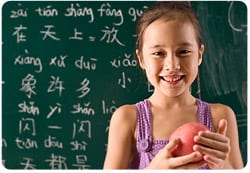
A primary school teacher instructs Mandarin to her Grade 1 students at Tessa International School's Mandarin Track.

Learning Mandarin Chinese, one of the most widely spoken languages worldwide, can be a rewarding experience, offering cultural understanding and professional opportunities.

1. Chinese is the native language for 20% of the world’s population

Learning Chinese creates an immediate connection between your child and 1/5 of the world’s population. That’s amazing! Even if you have no plans to set foot in a Chinese-speaking country any time soon, there are nearly 50 million Chinese who live outside of China.

2. Learning Chinese will be a career advantage

Career advantages for learning Chinese are numerous. The ability to communicate to over one billion people has major value in the job marketplace. Of course, this includes companies in China and other Mandarin speaking countries. But companies all around the world are striving to tap into the Chinese marketplace, and you’ll immediately differentiate yourself if you can speak Mandarin.

3. Chinese isn’t phonics based. Learning it is memory-intensive

Kids have the best memory capacities in the world.  The Chinese language isn’t phonics-based so you can’t learn a small set of alphabets/sounds and be able to read the language. It’s all memorization so the sooner your kids start, the better. Learning Chinese will strongly develop your child’s memorization skills. 

4. It’s really an art class

Chinese characters are made up of multiple components that fit together to create meaning and pronunciation. As children will mostly be learning pictographs and characters that have clearer visual meaning, characters become mini pictures. This can make learning characters a lot more fun and easier for children to both remember the characters by creating stories and writing by constructing pictures for each one. 

5. Mandarin helps having a better interpretation of symbols

Since Mandarin writing relies on thousands of characters, learners of Mandarin Chinese have to read and interpret a vast number of visual symbols, activating more regions of the brain than English, which relies on a phonetic alphabet. Through learning Mandarin, children can become more adept at visual communication, more readily interpreting symbols in visual art and understanding nuances in symbolism and visual communication.

6. Chinese will give English-speaking children a different paradigm for thinking

Languages affect the way we think, and therefore our perspectives. Giving kids a different language, particularly one so different from their native tongue, means we are also giving them a different paradigm for thinking. Bilingual kids are more likely to see things from different perspectives, and they are more likely to be emphatic with others.

7. Learning the Chinese language is the prerequisite for learning the Chinese culture and history

Language learning enables us to unveil the deep meanings embedded in cultural concepts, idioms, and historical texts, which are too complex to be fully captured in translation. Classical Chinese poetry, for instance, relies on linguistic nuances and historical allusions that lose depth when translated, making it difficult to fully appreciate works like Li Bai’s verses. Similarly, Confucian teachings, such as 仁 (rén)—often translated as “benevolence”—embody layers of philosophical and cultural significance that require a deep understanding of the language. To truly understand a culture, learning its language is essential.

8. Mandarin contributes to developing stronger Math skills

Yes, there is actually a scientific correlation between learning Mandarin and improved mathematical ability. Scientists theorize that because Mandarin representation of numbers is less abstract than Arabic numbers, and because the act of practicing handwriting requires repeated counting, young children gain greater familiarity with math and with numeric thinking. In learning Mandarin, the mathematical concepts are integral to the language fluency, and not a separate subject activating a different part of the brain.

Because Mandarin Chinese involves learning language, sounds, drawing, and math all at once, it activates more regions of the brain and improves cognitive development overall, even in adults. In fact, speakers of Mandarin use more of their brain more of the time, unlike English speakers who tend to alternate between left and right hemispheres. In theory, this more balanced brain could lead to greater overall creativity, enhanced problem-solving, and increased emotional intelligence.

9. Speaking Mandarin may offer kids a musical edge

Kids who speak Mandarin may outperform kids who speak English in at least one aspect of musical ability — perceiving pitch. Pitch refers to how high or low a sound’s frequency is. In tonal languages, such as Mandarin, pitch is very important. These languages use different pitch patterns to give meaning to words.

10. Your child will become bilingual in Chinese in a way they never could have otherwise

Immersion is the most efficient (and some would say the only) way to gain fluency in a target language, and Mandarin Chinese is no exception. The Chinese language is often considered one of the world’s most difficult languages to learn, but this sentiment is a major oversimplification. Like any language, learning Chinese has its challenges. Placing your child in an ideal learning environment, such as a language-rich program like Tessa Mandarin Immersion Program, is key to learning Chinese. 

Mandarin Chinese Programs at Tessa International School

Tessa Mandarin Immersion programs combine the US Common Core and Chinese National Standards with the International Baccalaureate (IB) framework to provide a comprehensive bilingual education from Nursery to Grade 5. Our program is designed to nurture bilingual Mandarin and English speakers while fostering a global perspective, critical thinking, and cultural awareness.


Are you ready to discover Hoboken’s leading international private school?

Contact Tessa International School to learn more!


What is immersion education?

7

Immersion education is a teaching method where students learn all subjects in a target language like French, Spanish, or Mandarin. It works best when children start early, as they can easily pick up language nuances. These classrooms offer efficient learning environments with quick transitions.

Teachers who are fluent and native speakers of the target language, commit to speaking it consistently. They use the target language during instruction, transitions, outdoor play, and meal times. Teachers pay close attention to students’ needs and individual learning styles.


The classroom features a literacy-rich environment with pictures, labels, and meaningful visuals to support the target language throughout the day. Teachers adeptly help comprehension through non-verbal clues and smart teaching strategies.

Days are organized, routines are consistent, and key phrases and vocabulary repeat often to boost vocabulary development. Children make connections across the curriculum as the target language and English curriculum align, reinforcing concepts and ideas in both languages.

Will your child lose their English?

Research indicates that children in immersion settings perform the same or better than their non-immersion peers.

What if you don’t speak the target language at home?

Your child can still succeed and gain proficiency even if you don’t speak the target language. Homework uses songs and games to review classroom learning in a fun and engaging way. Strong communication with your child’s teacher is essential for success.

Join us at Tessa International School

Discover why our bilingual curriculum is recognized as one of the best. Learn how we combine academic excellence with engaging, interactive experiences that foster global awareness.

Join us at Tessa International School

Discover why our bilingual curriculum is recognized as one of the best. Learn how we combine academic excellence with engaging, interactive experiences that foster global awareness.