
The Long-Term Benefits of Bilingualism and Biliteracy
This is the fifth post of our Literacy Progression Series. Read the previous post here.
We’ve explored how early literacy begins with sound, play, and oral language, how writing develops across languages, and how bilingual children learn to read. But what does all of this mean for the long run?
Why does it matter that your child is not just learning to read and write, but doing so in more than one language?
Because bilingualism and biliteracy go far beyond academics. They shape how children think, communicate, and engage with the world. And at an international school like Tessa, language is also a gateway to culture, identity, and global understanding.

Bilingualism Builds Cognitive Flexibility
Children who grow up navigating more than one language are constantly making connections, switching between systems, and thinking about meaning from multiple perspectives. This mental flexibility strengthens their:
- Executive functioning
- Working memory
- Problem-solving abilities
- Capacity to focus and filter out distractions
Learning in two languages helps develop a brain that is more adaptable. These benefits extend beyond language and support deeper thinking across all subject areas.
Biliteracy Deepens Conceptual Understanding
When children learn to read and write in two languages, they develop metalinguistic awareness—the ability to think about how language works. They begin to recognize patterns, compare sentence structures, and notice how different languages express ideas.
They also develop a deeper understanding of how to communicate clearly, adjusting tone, vocabulary, or form depending on the audience or purpose. These are essential tools for success in school and beyond.
Language Is Culture
At Tessa, bilingualism is not just about learning words. It is about entering a cultural space. Language holds values, customs, humor, storytelling traditions, and ways of thinking.
Through bilingual education, children learn to:
- Respect and appreciate diverse cultures
- Understand different perspectives
- See the world through more than one lens
From the way stories are told to the meaning behind gestures or phrases, language and culture are inseparable. This cultural fluency builds empathy, open-mindedness, and a strong sense of identity.

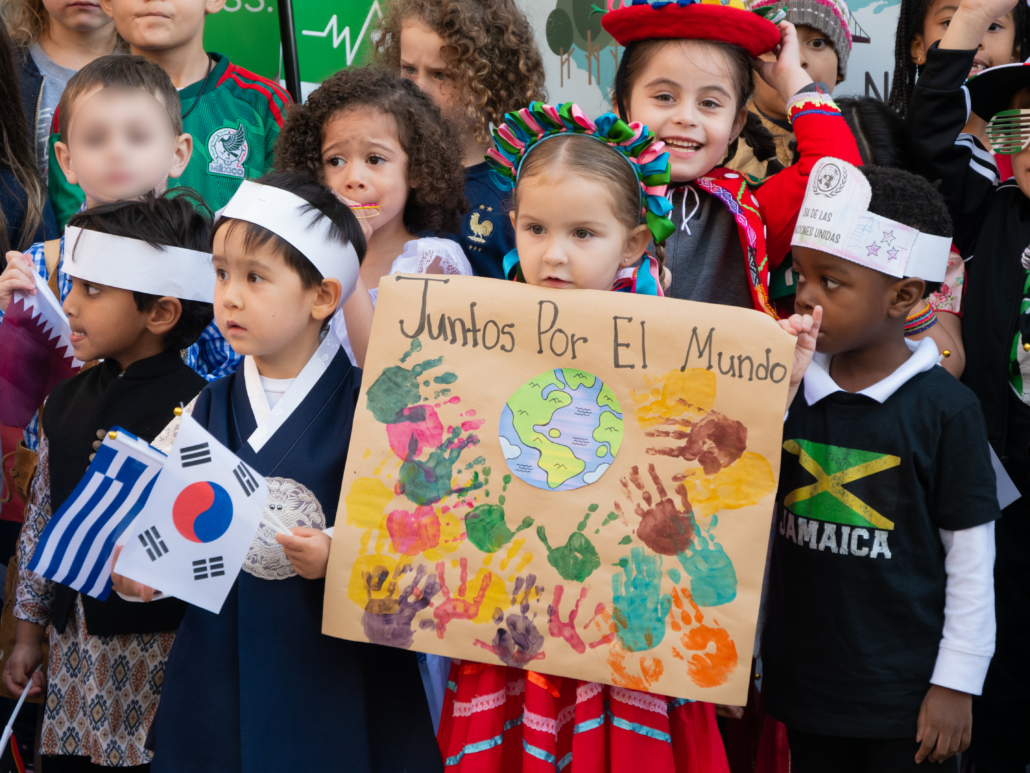
Events such as Heritage Day at Tessa International School encourage an international mindset, supporting children’s development as whole learners and their readiness for the future
A Foundation for Lifelong Success
Our goal is not just to prepare children for the next grade level. We are preparing them to thrive in a global world. Research shows that bilingual children are more likely to:
- Excel academically in later grades
- Perform well on standardized assessments
- Embrace learning additional languages
- Approach challenges with curiosity and flexibility
- Build confidence in international or multicultural environments
Learning more than one language is not just an enrichment. It is a meaningful part of what prepares your child to thrive—not only as a student, but as a communicator, a problem-solver, and a global citizen.
This brings us to the end of our early literacy series. We hope these insights have helped illuminate how literacy begins, why immersion matters, and how your child is growing every day.
Sources & Further Reading
- Bialystok, E. (2011). Reshaping the Mind: The Benefits of Bilingualism. Canadian Journal of Experimental Psychology
- Center for Applied Linguistics. (2016). Benefits of Bilingualism
- Thomas, W. P., & Collier, V. P. (2009). Educating English Learners for a Transformed World
- National Academies of Sciences, Engineering, and Medicine. (2017). Promoting the Educational Success of Children and Youth Learning English
- American Psychological Association. (2018). The Lifelong Benefits of Bilingualism


