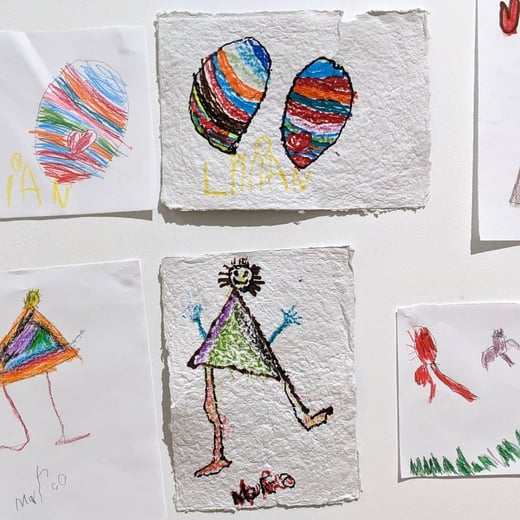
Summer camps are a wonderful opportunity for children to explore new horizons, make lifelong friends, and create lasting memories. If you’re searching for a summer camp experience that goes beyond typical activities, why not consider a bilingual summer camp? These unique programs provide an immersive language learning environment that offers numerous benefits for children. In this blog post, we’ll delve into the advantages of bilingual summer camps, with a special focus on the enriching experience offered by Tessa International School’s French, Mandarin and Spanish Immersion Camps.
Enhanced Language Skills
Language acquisition is a primary benefit of bilingual summer camps. When children are exposed to a second language in a fun and interactive setting, they naturally absorb vocabulary, pronunciation, and grammar rules. Tessa International School’s Summer Camp is designed to provide a full immersion experience, allowing campers to practice their target language with native speakers and peers, thereby accelerating their language skills development.
Cultural Appreciation and Global Awareness
Bilingual summer camps provide children with the chance to embrace different cultures, fostering a deeper understanding and appreciation of diversity. At Tessa’s Summer Camp, campers will not only engage in language immersion activities but also learn about customs, traditions, and celebrations from around the world. By exploring various cultures, children gain a broader perspective, develop empathy, and become global citizens.
Cognitive Advantages
Bilingualism has been shown to have positive effects on cognitive development. Research indicates that bilingual individuals often exhibit improved problem-solving skills, enhanced memory, and greater cognitive flexibility. Bilingual summer camps, like the one offered by Tessa International School, nurture these cognitive advantages by engaging campers in stimulating activities that require active language processing, critical thinking, and creativity.
Increased Confidence and Self-esteem
By participating in a bilingual summer camp, children develop increased self-confidence in their language abilities. Tessa International School’s Summer Camp offers a supportive and inclusive environment, where campers are encouraged to express themselves in their target language. Through interactive games, role-playing, and presentations, children gain confidence in their linguistic skills, empowering them to communicate effectively and assertively.
Social and Emotional Growth
Bilingual summer camps provide a platform for children to build new friendships and develop their social skills. Tessa’s Summer Camp fosters a collaborative and inclusive environment, where campers from diverse backgrounds come together. The camp’s engaging activities promote teamwork, cooperation, and communication, nurturing campers’ social and emotional growth.
Long-term Educational Advantages
The benefits of bilingual summer camps extend far beyond the summer months. Research suggests that bilingual individuals often excel academically, with improved problem-solving abilities, higher test scores, and increased creativity. By attending Tessa’s Summer Camp, children gain a strong foundation in a second language, which can pave the way for future language learning success and open doors to broader educational and career opportunities.
Bilingual summer camps offer a unique and enriching experience for children, providing a perfect balance of outdoor fun, cultural exploration, and language learning. Tessa International School’s Summer Camp stands out as an exceptional choice, offering a nurturing environment where children can thrive linguistically, socially, and emotionally. By attending this bilingual summer camp, in Spanish, French or Mandarin immersion, children embark on a journey that not only expands their language skills but also broadens their horizons, cultivates global awareness, and instills valuable life skills.
Learn more about Tessa International School’s Bilingual Summer Camp here.
Are you ready to explore the only language immersion summer camp programs in Hoboken?
https://tessais.org/wp-content/uploads/2023/05/P1170056j.png676900Tessa International Schoolhttps://tessais.org/wp-content/uploads/2025/03/Logo-Tessa-School.pngTessa International School2023-05-30 15:33:312025-04-01 20:03:58Bilingual Adventures: The Transformative Benefits of Learning languages in Summer Camps
As the weather warms up and the first spring flowers bloom, we have many projects budding here at Tessa! Here is what we have been up to recently.
Earth Month
Throughout April, our classes emphasized the importance of our planet and environment. Earth Day is an annual event on April 22 to demonstrate support for environmental protection. At Tessa, we like to say that Earth Day is all year long. From composting food scraps, and making their own paper, to learning how to clean the ocean: have a sneak peek of some activities our students participated in to learn about and celebrate the environment. To celebrate this day with the community, Tessa participated in the Earth Day Fair (Main streets Pops), on April 23!
Easter Bunny
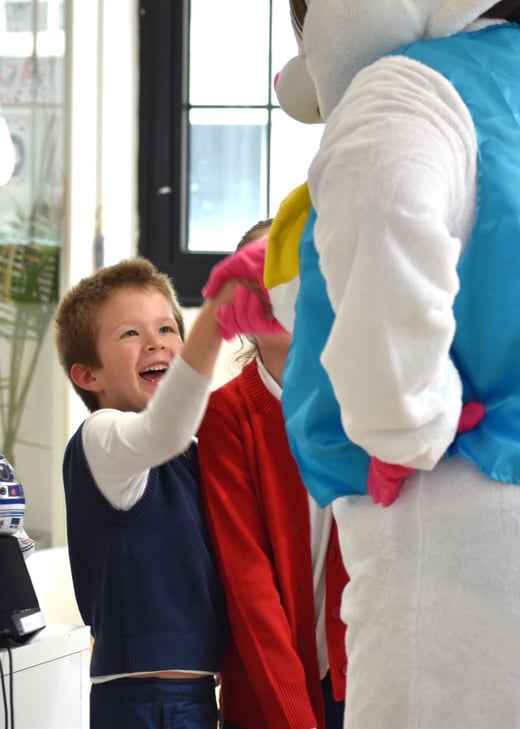
This month, we had a surprise guest! The Easter Bunny visited each classroom with her assistant, Ms. Kathleen, who distributed playdough eggs. The children got to ask questions, hug and dance with the Easter Bunny!💗
Visitors from NYU
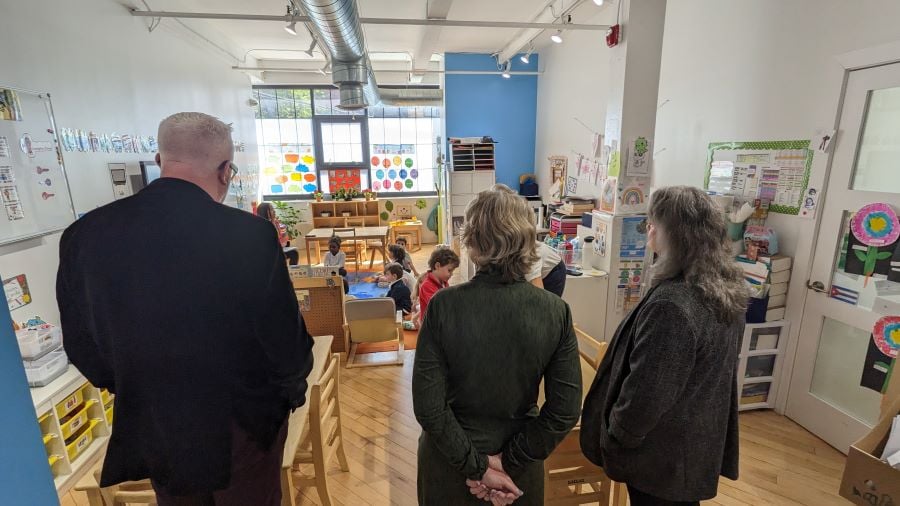
On April 21, NYU’s director of teacher training programs for Mandarin and the director of teacher training programs in French visited Tessa. They talked with some of our staff and visited the school, they were very impressed by what they saw in the classrooms! We have made connections with NYU and Columbia and are working to create teacher intern programs for Tessa. This exciting venture will bring us staff, interns, and professional connections!
Vacation Care
During the April Break, the school stayed open for Vacation Care. Vacation Care is offered to Tessa’s parents when school is not in session for breaks such as Winter Break or Spring Break and more. Vacation Care is in English and runs from 8.30 AM to 6 PM. The day involves structured play, arts and crafts, story-time, outside play, free play, and lunch, and is designed to be fun for our students!
End of Unit
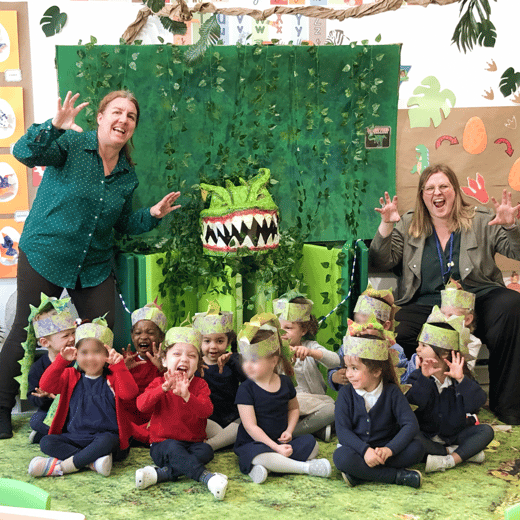
At Tessa, we encourage curiosity through hands-on activities, to spark the desire to learn and understand more about the world. PK3 parents were invited to their child’s end-of-unit celebration for “How the world works”. Through planets, dinosaurs, butterflies, and, of course, our little chicks, students fully understood the concept of the “cycle of life”, and all the transformations that species of our world can go through during their lifetime. The French PK3 class went back to the Jurassic times and held various activities related to archeology. The Mandarin PK3 students held a show about planets and solar systems, and fully mastered the duck dance! They even invited their parents on the dancefloor. Our Spanish PK3s organized games and crafts, in beautiful, themed decor. Including an exhibit on the different animals that they observed growing at Tessa. What was at one point an egg and caterpillars are now cute chicks and beautiful butterflies.
Conseil Consulaire des Bourses
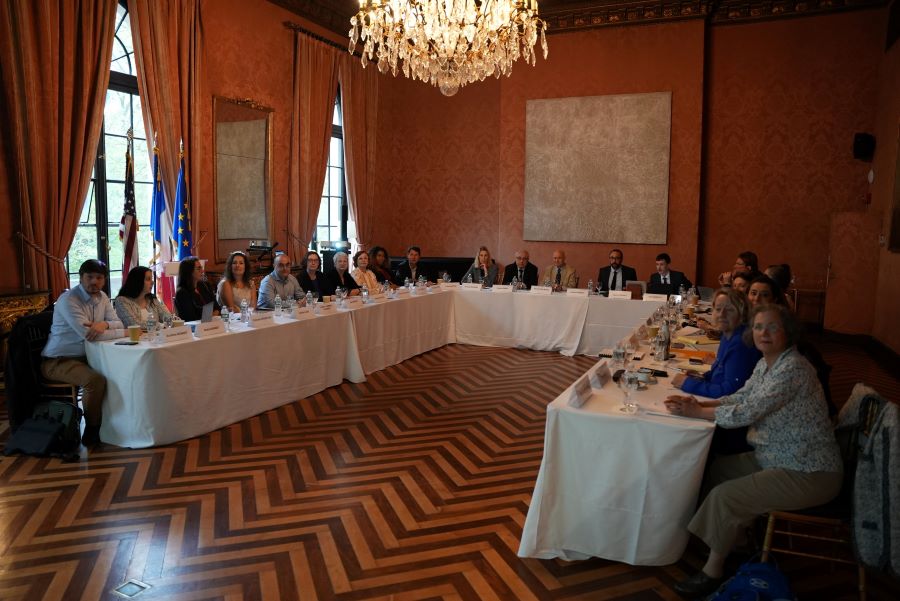
Following our French Homologation, we participated in our first “Conseil consulaire des bourses AEFE”. Our founder met with representatives from the French government and from neighboring French schools, to discuss scholarships proposed by the French government.
Step Up week!
This week is the “step up” week at Tessa. Students will visit their future teachers in their future classes in the coming days. Step Up days are 45-minute sessions where students can experience their future classes and discover what they will be learning. They become time travelers, taking a trip into their 2023-24 school year
https://tessais.org/wp-content/uploads/2023/04/DSC_0914-2-2.jpg675900Tessa International Schoolhttps://tessais.org/wp-content/uploads/2025/03/Logo-Tessa-School.pngTessa International School2023-04-28 19:57:422024-05-02 16:46:19A Very Tessa April
There are lots of ways parents can motivate kids into caring for our planet. Earth Day activities teach kids how to reduce their carbon footprint, appreciate everything the earth gives us and take steps towards protecting the environment.
When we share information in a manner that is both fun and enlightening, it will inspire kids to take action toward a healthier planet for future generations. In addition to the interactive activities below, you are welcome to visit our school’s Green Tessa Resource Page for more educational materials!
1. Connect with nature
Wouldn’t it be fun to take a walk through a local park? The first and best way to celebrate Earth Day is getting outside and exploring nature.
As they explore, kids can birdwatch and observe wildlife in natural habitats found throughout city parks and conservation areas.
There are countless ways to show kids how nature wakes up. In the spring, newly forming buds appear on trees. Birds chirp more often as the weather warms up. As they observe nature, kids just might develop a love for nature and our planet.
As you walk, be sure to remind kids about the golden rule of nature exploring: “Take only pictures, leave only footprints.”
2. Organize an Earth Day scavenger hunt
While kids are exploring nature, have them catalog what they find!
There are lots of ways to observe and record nature that don’t involve disturbing the environment or taking things out of it. Create a list of things for them to do and spot as they walk, including:
Drawing pictures of flowers and plants
Spotting birds (and identifying them if they can)
Writing down or taking pictures of any wildlife they spot
Collecting litter and recycling — with the proper equipment, of course
3. Hang birdseed ornaments
Celebrate Earth Day and feed the birds with the help of birdseed ornaments made from supplies you can find in the kitchen!
Great for kids of all ages, birdseed ornaments give feathered friends a snack and let kids see the birds that come to visit when you hang them outside the classroom or kitchen window.
What you need:
Straw
Twine
Birdseed
Corn syrup
Cookie cutters
Parchment paper
2 packets of gelatin
Cold and boiling water
What to do:
Mix the gelatin with ½ cup of cold water until it dissolves the powder.
Have an adult add ½ cup of boiling water to the gelatin so it dissolves.
Add 2 tablespoons of corn syrup and mix well.
Add birdseed to the gelatin mixture.
Spoon the birdseed mixture into cookie cutters and use parchment paper to pat the seeds into the cookie cutter.
Keep filling and pressing down the birdseed mixture. Be sure to leave a hole to thread twine through the ornament.
Place the filled cookie cutters in the fridge overnight.
The next day, give the birdseed ornaments a gentle push to let them fall out of the cookie-cutter mold.
Pull the twine through the holes and hang it outside for birds to enjoy!
4. Build an insect hotel
Your kids can build an adorable hotel for bugs using basic materials you’ll find around the home — and recycle some trash in the process!
What you need:
Tree bark
Pinecones
A large plastic bottle
Fallen sticks and twigs
Any other earthly elements your kids may want to add
What to do:
Cut the bottle into two pieces to form separated cylinders. Remove the top and bottom pieces, as we will not be using them.
Push holes in the top of the bottle pieces and thread twine to hang when the hotel is completed.
Put twigs, branches and pine cone pieces inside each bottle. You may need to snap the twigs to shorten them. Fill the bottles.
Hang outside to allow bugs to enjoy their new home.
5. Grow a love for plants with seed jars
KIds love science experiments! Involve kids in making seed jars to honor Earth Day. They’ll be able to watch seeds sprout and grow into a flower or vegetable, then plant it in a garden once it’s ready.
What you need:
Water
Paper towels
A clear large jar
Seeds (nasturtium, sunflowers, peas, and beans germinate quickly)
What to do:
Fold paper towels and place them inside jars. Allow your students to push the paper towels down into the jar.
Add water slowly into the jar but do not overfill it.
Put seeds on the wet paper towels near the edges of the glass so kids can watch their experiments grow before their eyes!
6. Build a cardboard tube bird feeder
Here’s a delightful DIY project for parents to try with kids. These cute feeders are completed in record time for birds to enjoy right away.
What you need:
String
Scissors
Birdseed
Butter knife
Peanut butter
Bamboo skewer
Toilet paper roll or another cardboard tube
What to do:
Cut two holes at the top and bottom of the cardboard tube.
Push the bamboo skewer through the bottom holes as a perch for birds to stand on.
Spread peanut butter throughout the outside of the tube.
Pour birdseed onto a plate and roll the tube in the seeds until it is completely covered.
Thread twine into the top holes and hang outside.
7. Clean up a science experiment
The words “science experiment” conjures up thoughts of cool and exciting things to try at school or with parents at home.
Involve your mad scientists in an oil spill and clean up experiment to enhance their awareness of environmental accidents.
What you need:
Water
Spoon
Dish soap
Cooking oil
Paper towel
Cotton balls
Two tin pans
Medicine dropper
Oil Spill and Clean-up Science Experiment:
Fill the pan halfway with water.
Squirt some oil in the water.
Now comes the fun part! Experiment with ways to clean up the oil spill using cotton balls or trying to suck up the oil with a medicine dropper or paper towel.
Drop dish soap on the oil to see how the two elements react. The soap helps the oil to break apart so that cleaning up becomes an easier task.
Kids will gain a better sense of how oil spills poison marine life and birds.
8. Teach kids to recycle
It’s important to get kids interested in saving our planet at an early age. A valuable technique for instilling good recycling habits is to show kids how to sort recyclables.
This is a perfect Earth Day activity for preschoolers or kindergarteners, since it’s a skill they’ll use for the rest of their lives. Show kids how to separate plastics, metals, cardboard and glass. Ask them to place each type of recyclable into separate bins. Reinforce these skills throughout the year at lunchtime, or whenever students have recyclables.
DIY paper-making offers a hands-on way to teach kids about recycling.
9. Learn how to compost
Be sure to help kids develop good environmental habits like composting. They’ll learn how to reuse plant waste and make gardens abundant and healthy.
What you need:
Soil
An old rug
Compost bin with lid
Plant waste such as leaves and weeds
Kitchen waste from fruits and vegetables
What to do:
Put the bin outdoors on top of soil under the sun. Top up with kitchen waste.
Kitchen waste with a layer of soil.
Cover with a lid and the old rug.
Continue to add kitchen waste to the compost.
From time to time, be sure to turn over the compost with a shovel as it decomposes.
10. Make a bee and butterfly garden
Bees and other pollinators play an essential role in our food supply. Their decreasing numbers could affect the availability of produce at grocery stores.
Set up a new project for kids with basic instructions on how to plan and build a home garden that attracts bees, butterflies and hummingbirds. Give them handouts that contain a list of various plants and shrubs to get them started.
For kids who live in apartments, container gardens are a great space-saving alternative.
Wouldn’t it be fun to make a beautiful Earth Day keepsake using salt dough and food coloring?
Here’s what you need:
String
Child’s photo
Heart-shaped cookie cutter
Kids’ hands and a big smile!
Blue and green food coloring
Round non-stick cookie sheet
Salt dough (1 1/2 cups of all-purpose flour, 1 1/2 cups of salt and 3/4 cup of water)
Now, for the fun part!
Use two separate bowls to make blue and green salt dough.
Drop pieces of blue and green salt down onto the cookie sheet and blend the edges. Smoothen out so that the dough is flat.
Allow your child to put their handprint in the middle of the cookie sheet.
Use the cookie cutter to cut out the palm section.
Poke two holes at the top.
Bake for 3 hours at 200 F. Let cool overnight.
12. Make a coffee filter Earth
Watch kids’ amazement as they drop green and blue food coloring on coffee filters to create their own unique artwork of planet Earth! Here’s how:
What you’ll need:
Newspaper
Coffee filters
Eye droppers or spoons
Blue and green food coloring
What to do:
Take the supplies outdoors under the sun to maximize drying time.
Lay out newspaper on a table or walkway.
Put coffee filters on top of newspapers to catch excess water.
Use eye droppers or spoons to apply drops of food coloring on coffee filters. You can also use blue and green markers for the same effect!
Add a bit of water with a spray bottle to blur the lines between the blue and green, and watch as the Earth takes shape.
13. Create bottled hanging gardens
Share your love of gardening with your students by offering this fun tutorial on how to reuse a plastic bottle to construct a cute hanging garden.
What you need:
Pencil
Craft knife
Length of string
Thoroughly washed plastic bottle
Grab the plastic bottle and the craft knife to slice a long line from 1 to 2″ from the mouth of the bottle down toward the bottom. Cut out a rectangle. (A teacher or parent should do this.)
Poke a hole at each end of the bottle.
Push yarn through each hole with a pencil. Tie a few knots.
Fill the bottle with soil and plant seeds.
14. Take an Earth Day pledge
Since kids love to draw and doodle, put those talents to good use by creating an Earth Day pledge.
Make a list of the things kids would like to do to maintain the health of our environment:
Plant trees
Go paperless
Turn off lights that don’t need to be on
Use cloth grocery bags instead of plastic ones
Try shampoo bars instead of the bottled variety
Make cleaning products using lemon and vinegar
Stick to the three Rs: Reduce, Reuse and Recycle
Lower your carbon footprint by reducing trash output
Spend more time outside than playing video games indoors
Use energy-efficient LED bulbs — they last much longer than traditional bulbs
15. Take a virtual holiday
Since we can’t take vacations to explore faraway places, take a virtual day-trip with your family from the comfort of your living room.
Consider places you’ve always wanted to visit that showcase some of the most beautiful scenes Earth has to offer.
Virtual holidays are a great way to enjoy the scenery without the environmental cost of flying. We can teach kids that this is a viable way to reduce their carbon footprint and still have fun, too.
16. Build a vegetable garden with your family
Get back to basics by starting a vegetable garden with the entire family. Make family time feel more significant by showing kids how to grow and care for their vegetable gardens.
Like we mentioned above, it’s important to stress creating “bee” gardens filled with lots of snacks for our favorite pollinators.
17. Go paperless!
The best way to show kids to go green is by teaching them clever ways to go as paperless as possible. We need trees to give us oxygen, so it makes sense to spare them from being pressed into magazines and other paper goods.
Some ideas include:
Try going printer-free for 30 days
Consider sending digital greeting cards instead of mailing them
Buy digital magazines to keep on your computers or tablets and out of landfill sites
There are several ways we can go paperless to help preserve our planet’s health — how many more can your kids think of?
18.Make Earth Day salt dough ornaments
Get creative with your family by making up a batch of salt dough!
Begin by forming a ball with your hands and flattening it
Put a small hole near the top so that you can thread a piece of yarn or twine to hang it up
Use green acrylic or craft paint to brush on the continents
Fill in the remaining areas with blue paint
Voila — you have the world in your hands!
19. Upcycle plastic and metal
What plastic and metal items do you have at home that you want to throw away? There are endless possibilities for reusing those pieces for something that you need.
For example, we can use small plastic tomato boxes as a pencil cup or hold colored markers for craft projects.
Did you know metal tins are easily reused as pieces of art?
20. Eat tasty dirt cup treats
No celebration is truly complete without dessert, so bake a delicious treat and include kids in Earth Day festivities. All you need are a few simple ingredients and your taste buds are celebrating, too!
Ingredients:
Milk
Small cups
Oreo cookies
Gummy worms
One package of Jell-O instant chocolate pudding
Instructions:
Make the mud by mixing chocolate pudding with three cups of milk.
Evenly distribute the chocolate mixture in plastic or ceramic cups.
Crush Oreos with your hands or in a sandwich bag to create “dirt”.
Spread the crushed cookies on top of the pudding.
Add the gummy worms on top to make a fun and delicious treat!
Are you ready to discover Hoboken’s leading international private school?
https://tessais.org/wp-content/uploads/2023/04/DSC_0346.jpg600900Tessa International Schoolhttps://tessais.org/wp-content/uploads/2025/03/Logo-Tessa-School.pngTessa International School2023-04-20 18:01:502025-04-16 19:53:30Earth Day Activities to Teach your Kids About the Environment
There has been an immense amount of discussion and research done on bilingualism in recent years. As scholars and educators dive deeper into the effects of studying multiple languages, more and more evidence is found to support international language learning.
Over the past two decades, researchers have focused specifically on the cognitive benefits gained by children who are introduced to bilingualism at an early age. Specifically, they have measured the ways in which children learn and react to various aspects of their education and found astounding results for multilingual children.
According to NPR.org, these results show benefits so great, they will be utilized and carried throughout your child’s entire life. It is a lifetime of learning in a way that is unparalleled to any other learning approach available.
Bilingual Education Benefits
While the benefits of bilingual education are exponential, there are several benefits that are so great, they should be considered priority in terms of learning. Among these benefits are invaluable skill mastery of things like problem solving, concentration and focus on any given task, and the ability to think critically and choose words with purpose and meaning.
“Researchers found that young adults proficient in two languages performed better on attention tests and had better concentration than those who spoke only one language,” according to LiveScience.com.
Problem Solving Skills
For starters, children who are introduced to a second language, are essentially challenging their brains to sort out multiple information and channel appropriate times to use each piece. By doing this, it is similar to solving riddles or puzzles – it forces the brain to consider information as a whole (call it “big picture thinking”) and sort out conflicting data. In terms of language learning, the child must sort out each language and decipher which language is appropriate to use at different times.
“Bilingual people often perform better on tasks that require conflict management… (because they possess) the ability to ignore competing perceptual information and focus on the relevant aspects,” explains the US National Library of Medicine.
Mastering Focus
Another benefit of bilingual education is the inadvertent mastery of focus and concentration. Since bilingual children must constantly think before speaking in order to ensure they choose the correct language to adequately communicate, they are naturally training their minds to reach mastery levels of focus and control.
“Because both of a bilingual person’s language systems are always active and competing, that person uses these control mechanisms every time she or he speaks or listens. This constant practice strengthens the control mechanisms and changes the associated brain regions,” the National Library of Medicine explains.
Critical Thinking
This level of concentration and focus that children with bilingual education will master, is what leads to an impressive critical thinking development. Essentially, by training their minds to pause before speaking and focus on what they wish to say, bilingual students learn the basis for a lifetime of critical thinking skills.
“Bilingual children as young as age 3 have demonstrated a head start on tests of perspective-taking and theory of mind – both of which are fundamental social and emotional skills,” reports NPR.org.
Overall, children who participate in bilingual education programs are proving to be more adept at communication in general, as well as having a greater cognitive ability and focus than their monolingual counterparts. Research continues to pour in on the benefits of bilingualism in early childhood education, but the results already reported have shown exponential plusses to international language learning.
Learn more about a bilingual education at Tessa International School here.
https://tessais.org/wp-content/uploads/2019/05/Brain-Function-Image.jpg12001800Tessa International Schoolhttps://tessais.org/wp-content/uploads/2025/03/Logo-Tessa-School.pngTessa International School2023-04-05 06:00:422024-10-16 20:58:27Why Early Bilingual Education Boosts Brain Function and Development
With March comes the beginning of Spring, and with the beginning of Spring, new projects. Here is what we have been up to recently.
Women History Month
In the Classrooms
On Women History Month, our Spanish Primary students worked on writing (and presenting) biographies from women who have made important contributions. The children were grouped by two, and write findings down in Spanish. This activity teaches them research and presentation skills, new vocabulary and a new literary genre: biographies.
Our Founder at NYCNavigator’s International Women’s Luncheon
Our Founder, Isabelle Bonneau, was invited by NYC Navigator to their International Women’s Luncheon, in honor of International Women’s Day. She presented her story as a woman entrepreneur and recounted how she founded Tessa.
Isabelle began her studies in Business Administration and worked internationally for 8 years, before moving to the United States. In 2007, she started Be Lingual, a premier language program for schools and language immersion summer camp. In 2017, after years of research and hard work, she opened Tessa with 14 children. She had the strong desire to bring to our community a multilingual school with high academic and socio-emotional standards, the likes of the best independent schools in New York City. 5 years later, we are very proud to be part of that vision brought to life, and to participate in the continuing growth of our beautiful school. We congratulate Isabelle and her many accomplishments.
jjj
One of Our Parents Invited to the White House!
Tessa French Kindergarten parent and PTO member Amy Boldosser-Boesch was invited by First Lady Dr. Jill Biden and Secretary of State Anthony Blinken to celebrate International Women’s Day at the White House.
Amy attended the International Women of Courage Award ceremony, which honors champions of gender equality and social justice from around the world. Amy shared these remarks from the First Lady who gave a special message to girls during the celebration: “And to every girl who has ever wondered: Can I—one person, one voice, one girl—fix what’s broken? Let the women that we celebrate today be an answer to that question: An unequivocal yes. When you learn and explore, when you raise your voice, when you move through the world with your shoulders back and your head held high, step by step, you shift the ground beneath you. Draw strength from the Women of Courage who came before, share that strength with the sisterhood that surrounds you, and the ripples of that power will transform our world.”
Francophonie Month
March is Francophonie Month, celebrating the French language and diverse Francophone cultures through cultural activities held worldwide.
March 20 has been observed worldwide as International Francophonie Day since 1988. The date commemorates the establishment of the Agence de Coopération Culturelle et Technique, the precursor to the International Organization of La Francophonie, the organization representing countries and regions where French is the first or customary language. Today, with 300 million speakers worldwide, French is the fifth most spoken language in the world; La Francophonie has 88 member states and governments.
Here is an overview of our French Program at Tessa:
St Patrick’s Day
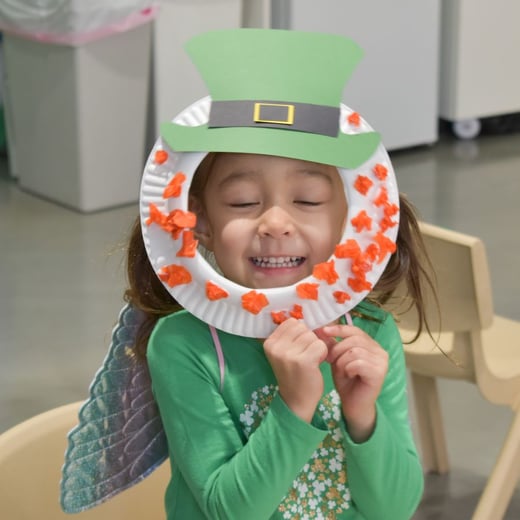
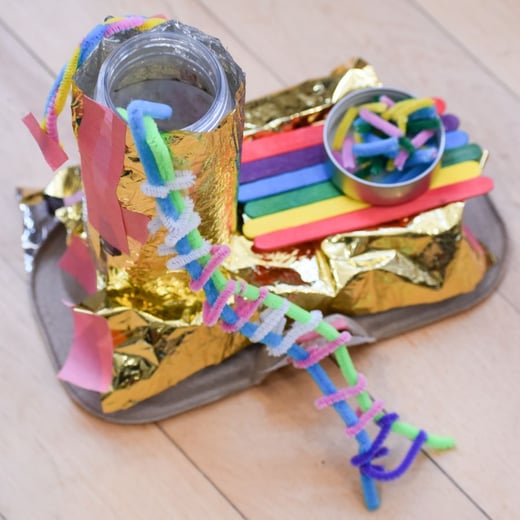
This celebration has been a source of learning opportunities at Tessa. Among others, our PK3s and PK4s Spanish met for buddy days and worked together on a themed craft: they practiced folding paper, cutting and gluing to make an accordion leprechaun. Our Primary students celebrated the end of their unit by presenting a project they have been working on these past few days: a leprechaun trap! They have been studying structures, and are now able to build their own. We are very impressed with the results!
New Friends in the Classroom
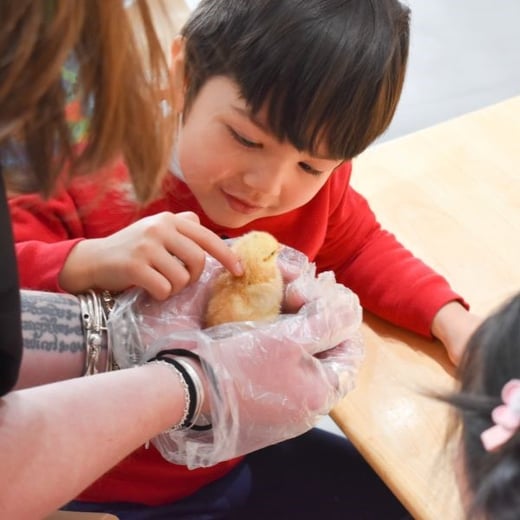
This month we welcomed new friends at Tessa! Eggs and caterpillars that turned into little chicks and beautiful butterflies. While the eggs were incubating, PK3 students were be able to observe them and watched the caterpillars create their cocoon. They learned about the cycle of life. These kinds of hands-on-learning activities are the perfect way to keep children excited and have them remember lessons for life.
Recycling & Reusing
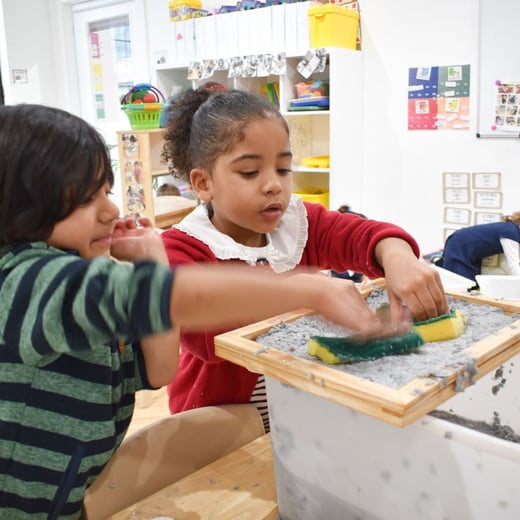
Our PreK4s made paper from scratch! They decided to recycle their paper scraps into brand new paper sheets. This fun activity teaches them how to reuse waste, and how to get creative with it. As part of their unit on How the World Works, and around the central idea “Materials behave and interact in certain ways, which determine how people use them”, students will explore how to transform matter and reuse it.
We hope you liked this glimpse of the life at Tessa. And there is so much more happening! If you would like to know our school better, we invite you to come visit us!
https://tessais.org/wp-content/uploads/2023/03/DSC_0492-1.jpg520520Tessa International Schoolhttps://tessais.org/wp-content/uploads/2025/03/Logo-Tessa-School.pngTessa International School2023-03-31 19:25:272024-05-02 16:46:58A Very Tessa March
February is the shortest month of the year, but not the least eventful! Here is what we have been up to recently.
Black History Month
Throughout the month of February, our classes emphasized the achievements of African-American figures, and African- American culture in their activities. Black History Month is an annual celebration of achievements by African Americans and a time for recognizing their central role in U.S. history. To observe Black History Month, our students have been reading or listening to books such as Dream Big or Black is a Rainbow Color, they have been doing craft activities related to African-American culture, learning about its History.
Valentine’s Day
Love was is the air around February 14! We invited parents to come into the classrooms to organize activities, children and teachers dressed in pink, white and red, love letter boxes filled up. Our parent organization also held two dances. It was a big success, and a lot of fun. It is so important to teach children to spread love around them!💗
Vacation Care
During the February Break, the school stayed open for Vacation Care. Vacation Care is offered to Tessa parents when school is not in session for breaks such as Winter Break or Spring Break and more. Vacation Care is in English and runs from 8.30AM to 6PM. The day involves structured play, arts and crafts, story-time, outside play, free-play, lunch, and is designed to be fun for our students!
In-Service Days
At the end of the February break there are days built into the academic calendar for teachers and staff members to have the opportunity to grow professionally by learning new things. Teachers explore emerging trends, best practices, and strategies to improve student outcomes. On the last day, we had a very interesting presentation by one of our nursery teachers on how to explore the topic of cultural origin in early childhood education. Our teachers are talented and dedicated individuals with various passions, centers of interest and talents. We all have a lot to learn from each other!
Composting with Tessa’s Lomi
In the hallways of Tessa, you can see a strange-looking machine. This is our new Lomi!
A Lomi is an appliance turning waste into dirt in a faster and cleaner way. We strongly believe change starts with children, and by teaching them good habits that can last a lifetime.
So starting on a voluntary basis, our classrooms are collecting food scraps from their lunches, and proceeding to compost them. Composting is an excellent hands-on science activity for kids. By composting, they will learn about the three environmental Rs (reduce, recycle, and reuse), what items are biodegradable, the importance of worms & insects, and much more.
We hope you liked this glimpse of the life at Tessa. And there is so much more happening! If you would like to know our school better, we invite you to come visit us!
https://tessais.org/wp-content/uploads/2023/03/DSC_0200c.jpg600900Tessa International Schoolhttps://tessais.org/wp-content/uploads/2025/03/Logo-Tessa-School.pngTessa International School2023-03-03 19:54:502024-05-02 16:46:30A Very Tessa February
I was standing at the door one morning as a child entered eating a breakfast roll. I jokingly asked if I could have a bite, to which the response was a resounding ”NO!” The mom told her child that it is nice to share, but the child insisted that “Mommy we are not supposed to share food!”. In fact, young children do not yet grasp the concept of sharing. It is a complex developmental task. Here are a few tips on modeling teaching your child to share.
Too Young to Share?
If you’ve ever taken your young child to a public playspace you’ve undoubtedly heard parents or nannies barking at their little companion to share.
“Share, Frances!” “Arthur, you need to share!”
But there’s a difference between telling your child to share at playtime and teaching and modeling sharing behaviors to your child.
Sharing is so difficult for little ones because it involves so many of the big hard skills that they just haven’t mastered yet: self-regulation, communication, patience and empathy. They’re difficult concepts, and for that reason, sharing truly is a developmental milestone.
Before the age of 3.5, in fact, children really aren’t even able to wrap their minds around the concept of sharing, according to the American Academy of Pediatrics.
“Sharing is complex and something children aren’t ready for developmentally and cognitively until about the age of four – and for some children older,” says Rachel Duda, VP of Learning at Vivvi. “If your child isn’t doing this yet at the age of 2 or 3 it is not something to be concerned about, because they’re not developmentally ready.”
Before they get to this milestone though, she says, “It is important that grownups model sharing in everyday life and narrate and name what’s happening.”
Here are five steps to help you model and teach sharing to your child during playtime:
No Grabbing Please
Imagine being lost in a world of play with a toy and then another kid (or grown up!) grabs it and takes it away. Ouch! That can be so upsetting and disruptive. Sharing and taking turns is so much easier when there’s a firm No Snatching rule in place.
For a child that can understand fairness, this concept can be discussed: snatching never feels fair and little children really desire a sense of fairness. For a child not yet able to comprehend that, a little parenting redirection can help. When a snatch happens, help the child responsible give the toy back to the child who had it first and then help them negotiate sharing using the steps that follow this one.
Admittedly as parents, sometimes we need to pick up our child’s toys and get them out the door or in the bed—even when they don’t want us to do it. But here, we suggest giving your child warnings. “Two more minutes with the blocks before bedtime,” etc.
Complete their Play
When your young child is playing with blocks or dolls or pots and pans, they have a game at play. Although everyone else may be completely oblivious to what they’re doing, your young child has developed rules and missions and feelings for this game in their mind. And they’d really, really like to finish it before they have to give it to the next child in line. You can understand that, right?
Help them come to a natural completion of their play before they pass the toy off by allowing them the time and space they need to finish their game.
Put a time frame On It
You can help your child find a natural completion to their play by asking them how much longer they need. Would your child like one, two or three more minutes with their toy before they share it?
For example, you’d say, “Mila, it really seems like Libby would like a turn with that doll. How much longer would you like with a doll to finish up your game?”
If Mila says “I don’t want to share” you can remind her that she gets to choose how much longer she gets with the doll. Would she like one, two or three minutes?
Taking Turns
Once you’ve navigated your way through the initial share, you may see this is a toy many children are interested in having a turn with.
Help them figure out an order for their share rotation – who goes first, second, third. You may find the children organically play and pass off to the next child without any interference necessary. Yippee! If that isn’t the case, you have a few options. You can remind each child, “one more minute then pass to Elsie,” or you can bring out a timer.
Tip: Make sure to narrate and thank children for showing kindness. “Gigi, you passed the toy to Leon so gently! Great job!”
Give your child freedom to create the play on their own terms – but also are available to help with conflict resolution when needed.
Kathleen Visconti
Head of School
https://tessais.org/wp-content/uploads/2023/03/DSC_0170.jpg600900Tessa International Schoolhttps://tessais.org/wp-content/uploads/2025/03/Logo-Tessa-School.pngTessa International School2023-03-03 18:29:242024-10-16 20:58:535 Tips to Teach Your Child to Share
Each child has their own way to learn. Some prefer to learn by seeing or hearing, others by doing, some by reading, and others by asking questions. One thing all students have in common however, is that they learn best when incorporating topics that interest them into their studies. Here at Tessa, we know and understand this. We strive to help our students develop the skills needed to face challenges at home, on the streets or in the classroom, through an additional language.
Learning Spanish at Tessa International School
At Tessa, students learn in the language – rather than being taught the language as an independent subject.
Our Spanish Teachers use the language in the most organic way possible to communicate with their students, using not only their voices, but also their body language, signs or objects. Research indicates that the brain circuits associated with language learning are more flexible at a young age. This flexibility allows students to grasp the language rapidly.
Preschool: A Full Immersion Approach
Tessa’s unique language program begins in Preschool with an 80% immersion in the target language (here Spanish), ensuring students develop second language proficiency by the end of Kindergarten.
In PK2, students start expressing their basic needs using words like “agua”(water), “baño” (bathroom), “hambre” (hungry), and more. The learning journey starts with the most basic concepts of the language: listening and repeating.
In PK3, they will be introduced to the Spanish Alphabet in uppercase and will practice to write. At the end of PK3 they will be able to express their thoughts into 4 word-sentences like “El carro es amarillo” or “Puedo ir al baño” (The car is yellow or Can I go to the bathroom?).
In PK4 they will keep practicing the alphabet and are going to focus on the lowercase Spanish alphabet. They will also be introduced to the first phonics, guessing the beginning or ending sounds of the words. From listening to the language, they will be encouraged to use it more frequently in the classroom and in their daily activities.
Our kindergarteners are ready to reinforce all the knowledge acquired through the years and put it into practice by expressing themselves. They will increase their vocabulary and be able to tell short stories of 3, 4 and 5 events using sequence words like “primero” (First), “luego” (then) and “finalmente” (finally). They will begin to read and write.
Primary: A dual language program
In primary school, the week is equally divided between English and Spanish. During this time, students will continue to develop their Spanish reading, writing, listening, and speaking skills.
They will be able to use the target language fluently, thanks to the skills gained throughout the years at Tessa. Students will learn how to identify sounds within words, and combine the sounds into complex words to read a variety of texts. They will start to explore the language, its spelling, rules, grammar and conjugation.
At Tessa, we teach language through content, and we teach content through language. Every situation, in and out of the classroom, is an opportunity to reinforce the learning of the target language.
If you would like to learn more about our Spanish program, we invite you to schedule a private tour and meet our team.
https://tessais.org/wp-content/uploads/2023/02/P1090371-1.jpg676900Tessa International Schoolhttps://tessais.org/wp-content/uploads/2025/03/Logo-Tessa-School.pngTessa International School2023-02-06 17:54:352024-10-16 20:59:31Learning Spanish at Tessa International School
2023 started off beautifully with many celebrations and learning opportunities. Here is what we have been up to at Tessa in January.
Lunar New Year
Celebrations are a big part of Tessa’s culture. And January has been very colorful thanks to the different activities and decors honoring the Lunar New Year. Some parents came to school to decorate, read stories or organize crafts for students. We also invited a special guest, who specializes in sugar painting, a form of traditional Chinese folk art. She demonstrated her art and created sugar animals for each student.
We also wanted to celebrate with our community at large. We organized a themed Open House, where Lina Liu Artists performed traditional acrobats. It really was a great morning!
Did you know? Lunar New Year VS Chinese New Year
Chinese New Year is only one festival under the umbrella term of Lunar New Year and refers to the celebration specific to Chinese culture. While Lunar New Year is widely celebrated by countries in Asia, Chinese New Year is only observed in China and celebrated by Chinese people. Read more here.
End of Unit Celebrations
Our PK4 parents were invited to Tessa to celebrate the End of Unit: How We Express Ourselves. These past few weeks, children studied how wonder within us can make us communicate in different ways. Where does wonder come from ? What are the different ways to communicate? What is the connection between wonder and feelings? Through these different ideas and questions, this unit facilitated a strong focus on Visual Arts, Performing Arts and Language.
A Unit of Inquiry in the IB provides schools with a curriculum framework of essential elements — the knowledge, concepts, skills, attitudes, and action that young students need to equip them for successful lives, both now and in the future. Learn more about End of Unit projects at Tessa on our blog.
Field Trips
January has been an eventful month, full of learning experiences. For their IB unit of inquiry study called “How We Express Ourselves”, our PreK3s worked on learning how colors and emotions can be expressed through art. They went on a field trip to Urban Arts in the Monroe Center and explored the color yellow. Our Primary students visited the Hoboken Public Library, and for their unit on “How We Express Ourselves Through Stories”, they also went to the New Jersey State Theatre. They enjoyed the play “The Ugly Duckling” by the UK based Tutti Frutti Prod.
Dental Hygiene at Tessa
The Bear Brook Pediatric Dentistry team came to Tessa to introduce students to dental hygiene and oral health. They reviewed healthy brushing routines and learned why they are important.
Dental hygiene is an essential lesson for preschool-aged children to learn in order to start good habits early. Through demonstration and a hands-on approach, we want to familiarize our students with appropriate ways to keep their teeth clean and healthy!
Registration is Open for Summer Camp and Afterschool Winter Semester!
We opened registration for our Summer Camp programs. Our Summer Camps are thoroughly enjoyable language immersion programs in the language of your choice – Spanish, French or Mandarin. With a new theme and adventure each week, take advantage of this perfect mix of fun academics and outdoor activities.
Register by March 1st, 2023 and benefit from our Early Bird rates. Jumpstart your child’s future, engage them now! Learn more here.
A new semester also means new afterschool activities! At Tessa, we offer a wide range of afterschool activities, from soccer, to chess, to dance, to coding and more. Did you know? Our language activities are open to non-Tessa students. As part of our afterschool program, we propose French, Mandarin and Spanish classes. We also offer additional languages such as Russian and Hindi! Learn more here.
We hope you liked this glimpse of the life at Tessa. And there is so much more happening! If you would like to know our school better, we invite you to come visit us!
https://tessais.org/wp-content/uploads/2023/02/P1110748-1.jpg422655Tessa International Schoolhttps://tessais.org/wp-content/uploads/2025/03/Logo-Tessa-School.pngTessa International School2023-02-03 18:49:472024-05-02 16:46:40A Very Tessa January
Preschool through the end of Primary School is a fundamental period of time in children’s schooling and development. They will learn how to socialize with other children, how to behave in society, how to understand their emotions, respect rules, understand them and even create them as soon as they are able to. They “learn how to learn” so that they become efficient when asked to work by themselves. On the academic level, they will develop a variety of skills on different subjects like fine motor skills, math, oral and written language, arts, sciences and physical education. They are building strong foundations for their whole school life and later, their adult life.
Learning French at Tessa International School
The French program at Tessa covers all grades from PK2 to the end of Primary. Students learn in the language – rather than being taught the language as an independent subject. To lead them on their learning journey, we are using different methods : pretend play, free play, board games, construction games, logic games, hands-on activities, workshops, centers, problem solving activities… We try as much as possible to adapt to their needs. Our mission is to make sure they are happy to come to school, that they are curious and eager to learn, and that they can develop their own personality.
Preschool: A Full Immersion Approach
Tessa’s unique language program begins in preschool with an 80% immersion in the target language (here French), ensuring students develop second language proficiency by the end of Kindergarten.
In PK2, the focus is on language immersion, developing oral skills, and learning basic vocabulary for the students to start being able to express their basic needs in the target language and make them explore and adapt to their environment.
In PK3, emphasis is placed on building simple sentences, improving their pronunciation, learning age-appropriate thematic vocabulary, developing their understanding, entering the written language, discovering capital letters and vowel sounds.
In PK4, they start building longer and more complex sentences, they refine their understanding in different contexts, they keep learning the alphabet through writing, start working on syllables and use letters to write easy words.
In KG, students will get ready for first grade by doing preparatory work in reading by studying the phonics and associating them to letters, playing with syllables, reading and writing easy words, copying sentences from a model.
Primary: A dual language program
In primary school, the week is equally divided between English and French. During this time, students will continue to develop their French reading, writing, listening, and speaking skills.
They will learn how to read phonics, syllables, words, sentences, so that by the end of 5th grade, they are able to read books and write in both French and English. The focus is put on comprehension of written texts, as well as grammar and conjugation.
Learn more about Tessa International School’s French program and discuss with our team by scheduling a tour: https://tessais.org/visit-tessa/
https://tessais.org/wp-content/uploads/2023/01/P1100027-scaled.jpg13521800Tessa International Schoolhttps://tessais.org/wp-content/uploads/2025/03/Logo-Tessa-School.pngTessa International School2023-01-30 15:05:552024-10-16 21:00:23Learning French at Tessa International School
Join us at Tessa International School
Discover why our bilingual curriculum is recognized as one of the best. Learn how we combine academic excellence with engaging, interactive experiences that foster global awareness.
Discover why our bilingual curriculum is recognized as one of the best. Learn how we combine academic excellence with engaging, interactive experiences that foster global awareness.



.png?upscale=true&width=378&upscale=true&name=Screenshot%20(27).png)


.jpg?upscale=true&width=520&upscale=true&name=IMG_2013%20(1).jpg) jjj
jjj.jpg?upscale=true&width=520&upscale=true&name=IMG_2002%20(1).jpg)
-1.jpg?upscale=true&width=320&upscale=true&name=unnamed%20(1)-1.jpg)